
When you are locked out of your vehicle, a car door unlock wedge tool is one of the safest and most effective methods professionals use to gain entry without causing damage. Whether you are considering a DIY approach or simply want to understand what a locksmith does when they arrive, knowing how wedge tools work can help you make informed decisions during a lockout emergency.
This guide explains the types of wedge tools available, how they create the necessary gap in your car door, where to position them safely, and what companion tools work through that gap to unlock your vehicle. Understanding these techniques is essential for anyone in the UK facing a car lockout situation.
What Is an Air Wedge and How Does It Work?
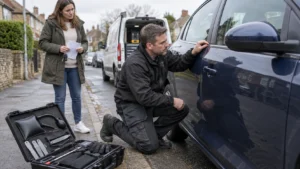
An air wedge is an inflatable rubber or vinyl bladder, typically sold with a hand pump, designed to create a controlled gap between your car door and its frame. The wedge is inserted flat into the door seal area, then gradually inflated using the pump. As it expands, it gently pushes the door away from the frame, creating space without applying excessive force to a single point.
The main advantage of an air wedge car unlock tool is its ability to distribute pressure evenly across the door edge. This minimises the risk of denting the metal, scratching the paint, or permanently deforming the weatherstripping. Professional locksmiths in the UK favour air wedges because they offer precise control over gap width and can be deflated instantly if repositioning is needed.
Most inflatable wedge car door kits include a small hand pump that screws into or connects to the wedge via a short tube. A few pumps will create a gap of 10 to 25 millimetres, which is typically sufficient to insert a long reach tool or coat hanger to manipulate the lock mechanism inside.
Air Wedge vs Hard Plastic Wedge: Which to Use

Hard plastic wedges are rigid, wedge-shaped tools that are tapped or pushed into the door gap. They are faster to insert but require more care because the rigid material can concentrate force at the insertion point, increasing the risk of paint chips or dents if used carelessly.
Air wedges offer gentler, more controlled expansion and are generally safer for modern vehicles with tight door tolerances and delicate paintwork. Hard plastic wedges can be useful on older vehicles with looser door seals or when you need a wider initial gap quickly, but they demand more skill to avoid damage.
For most car lockout scenarios in the UK, an inflatable air wedge is the preferred choice. If you are building a pump wedge lockout kit for personal or professional use, include both types so you can adapt to different vehicle designs and door conditions.
Where to Position the Wedge on Your Car Door
Proper wedge placement is critical. The most common and safest position is at the top corner of the driver’s door, near the A-pillar (the vertical frame between the windscreen and the door). This area typically has the strongest door structure and the most flexible weatherstripping, reducing the chance of permanent deformation.
Insert the deflated air wedge (or the thin edge of a plastic wedge) into the gap between the door and the frame, starting at the top corner. Work it in gently, taking care not to force it past the weatherstrip. Once the wedge is seated, begin inflating slowly, checking frequently that the door is moving evenly and that the weatherstripping is not being pinched or torn.
Avoid placing the wedge near the door handle or latch mechanism itself, as this area is more rigid and harder to pry open. The top corner offers the best combination of flexibility and access to the interior lock controls.
How Much Gap Do You Actually Need?
Most car lockout situations require a gap of just 10 to 20 millimetres to insert a long reach tool. Over-inflating the wedge or creating too wide a gap increases the risk of bending the door frame or cracking the paint along the door edge.
Inflate the wedge in small increments, testing the gap width by attempting to slide your chosen tool through. Once the tool fits comfortably and can reach the door lock button or handle inside, stop inflating. More gap does not equal faster unlocking; it simply raises the risk of damage.
Professional locksmiths will often use a door wedge unlock tool in combination with a door guard or protective shim to shield the paint during the process, further minimising cosmetic damage.
Tools to Use Through the Wedge Gap
Once you have created a safe gap with your wedge, you need a second tool to reach inside and manipulate the lock. Common options include:
- Long reach tools: Flexible rods with hooks or loops at the end, designed to press unlock buttons or pull door handles from inside the cabin.
- Air bladder extensions: Some kits include a second, smaller bladder that can be threaded through the gap to create additional space further down the door.
- Coat hangers (with caution): Bent wire can work but risks scratching interior panels or snagging on wiring. Not recommended for modern vehicles with electronic components near the door frame.
The tool you select depends on your car’s lock mechanism. Vehicles with traditional pull-up lock buttons are easier to unlock with a simple hooked tool, while cars with flush electronic lock switches may require a flatter, more precise instrument. For detailed guidance on various unlocking methods, see our complete guide to opening a car door without a key.
Avoiding Paint and Weatherstripping Damage
The primary concern when using any car door unlock wedge tool is protecting your vehicle’s finish and seals. Follow these precautions:
- Always insert the wedge into the weatherstripping gap, not directly against painted metal.
- Use a protective sleeve or cloth wrap around hard plastic wedges to cushion contact points.
- Inflate air wedges slowly and monitor the door edge for any signs of stress, such as paint flexing or cracking sounds.
- Deflate and reposition immediately if the weatherstripping bunches, tears, or if the door frame begins to bend visibly.
- Never leave a wedge inflated longer than necessary; prolonged pressure can cause permanent deformation of the door seal.
If you are uncertain about your ability to use a wedge tool safely, it is always better to contact a professional auto locksmith. Repairing paint damage or replacing weatherstripping can cost significantly more than a locksmith callout fee in the UK.
When Wedge Tools Are Not Appropriate
Wedge tools are highly effective for many car lockouts, but they are not suitable in every situation:
- Vehicles with frameless windows: Some coupes and convertibles lack a solid door frame, making wedge insertion difficult or impossible.
- Cars with electronic lock malfunction: If the lock mechanism itself is broken, creating a gap will not solve the problem; you may need locksmith diagnostics or key reprogramming.
- Keys locked in the boot with no interior release: A door wedge will not help you access a locked boot unless your car has a boot release button inside the cabin.
- Modern vehicles with advanced anti-theft systems: Some cars will trigger alarms or disable the engine if the door is forced open, even slightly. In these cases, a locksmith with electronic bypass tools is a safer option.
If your car has automatic locks, you may also want to review our guide on getting keys out of a locked car with automatic locks, which covers additional techniques specific to power lock systems.
Professional Lockout Kits vs DIY Wedges
Professional pump wedge lockout kits, such as those used by auto locksmiths and breakdown recovery services in the UK, typically include multiple wedge sizes, protective shims, a variety of long reach tools, and carrying cases. These kits can cost between £40 and £150, depending on quality and accessory count.
DIY wedge tools are available from automotive suppliers and online retailers for as little as £10 to £30. Budget air wedges may lack the durability and controlled inflation of professional-grade models, and cheap plastic wedges can be too rigid or poorly shaped for safe use on modern vehicles.
If you are purchasing a wedge tool for occasional personal use, look for kits with the following features:
- Inflatable air wedge with a reliable hand pump and pressure release valve.
- At least one long reach tool with a protected tip to avoid scratching interior panels.
- Protective door guard or shim to place between the wedge and the car’s paint.
- Clear instructions with diagrams showing safe insertion points for common vehicle types.
For advice on car key emergencies and when to call a professional, explore our car key advice section.
When to Call a Professional Locksmith
While understanding how a car door unlock wedge tool works is valuable, many lockout situations are best handled by a trained professional. Consider calling a locksmith if:
- You have no prior experience using wedge tools and are concerned about damaging your vehicle.
- Your car has a complex lock system, frameless windows, or electronic access controls.
- You have tried a wedge tool and cannot reach the lock mechanism safely.
- Your vehicle is under warranty or lease, and you want to avoid any risk of damage that might void coverage.
Professional auto locksmiths in the UK carry insurance, specialised tools, and the experience to unlock a wide range of vehicles quickly and without damage. The cost of a callout is often comparable to the price of a quality wedge kit, and you avoid the risk of a costly mistake.
For more information on handling car lockout situations, visit our blog for the latest guides and advice tailored to drivers in the UK.
Final Thoughts
A car door unlock wedge tool, whether an air wedge or hard plastic wedge, is a powerful aid in non-destructive vehicle entry. When used correctly, these tools create the precise gap needed to manipulate interior locks without harming your car’s paint, frame, or weatherstripping. However, they require careful positioning, controlled inflation, and the right companion tools to be effective.
For most drivers in the UK, the safest approach to a car lockout is to contact a professional locksmith who has the training and equipment to resolve the situation quickly. If you do choose to attempt a DIY unlock, invest in a quality inflatable wedge lockout kit, follow best practices for placement and inflation, and never force a gap wider than necessary.
Understanding these techniques empowers you to make informed decisions during a lockout emergency, whether you handle it yourself or call for expert help.