
Getting locked out of your car can happen to anyone, and many drivers search for DIY solutions to avoid calling a locksmith. One of the most well-known methods to unlock car with coat hanger involves using a simple wire coat hanger to reach inside the door and manipulate the lock mechanism. While modern vehicles have increasingly sophisticated locking systems, this technique can still work on certain older models and specific lock types.
Before attempting this method, it’s important to understand that forcing entry into your vehicle carries risks of damage. This guide covers the coat hanger car unlock method in detail, including when it works, how to do it safely, and when you should stop and call a professional instead. For a broader overview of all available methods, see our guide on how to open car door without key.
What You Need: Preparing Your Coat Hanger Tool
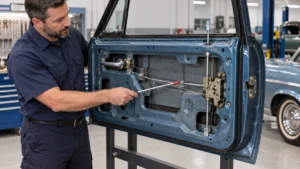
The coat hanger car unlock method requires minimal equipment, but having the right materials makes the process significantly easier and safer for your vehicle.
You will need:
- A wire coat hanger (not plastic or wooden, genuine wire)
- Pliers (needle-nose pliers work best for precise bending)
- Work gloves (optional but recommended to protect your hands from sharp wire edges)
- Wedge or doorstop (a small wooden or plastic wedge helps create gap space, though not always necessary)
- Good lighting (torch or mobile phone light to see inside the door gap)
Wire coat hangers from dry cleaners typically work best because they’re made of malleable yet sturdy steel wire. Avoid hangers with plastic coating or thick paint, as these add bulk and reduce flexibility.
How to Shape a Coat Hanger for Car Door Unlocking
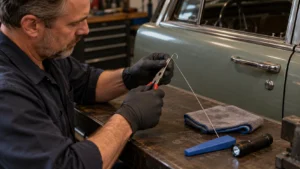
Properly shaping your wire hanger is crucial for success when attempting to unlock car door wire hanger method. The shape you create depends on your car’s specific lock mechanism, but the basic preparation remains the same.
Basic straightening process:
- Untwist the neck of the coat hanger where the hook connects to the main body
- Straighten the entire hanger into a long wire, leaving just the hook end intact if possible
- Use pliers to remove any remaining twisted sections or bumps
- Smooth any sharp edges that could scratch your car’s paint or interior
For vertical locks: Create a small hook (about 2-3cm) at one end that can slip over the top of a lock button. The hook should be tight enough to grab but open enough to slip around the button.
For horizontal locks: Bend the end into a right angle or small loop that can catch and pull the horizontal lock lever towards the unlock position.
Test your bends by pressing them against your palm. If they’re too sharp or rigid, they may scratch surfaces or break off inside the door. Aim for smooth curves rather than sharp angles wherever possible.
Method 1: Unlocking Vertical Lock Buttons
Vertical lock buttons (the type that pop up and down from the top of the door panel) are often the easiest targets for the DIY car unlock coat hanger technique. This method works best on older vehicles manufactured before 2000.
Step-by-step process:
- Create a gap: Gently work the straightened hanger between the car window and the weatherstripping at the top of the door. Start at the back corner of the window where the seal is often slightly looser.
- Insert the tool: Slide the hanger down inside the door cavity, keeping the hooked end pointed towards the lock button. You may need to angle it slightly forward or back depending on where the button sits.
- Feel for the button: Move the hanger slowly until you feel resistance, this is likely the lock post. The button is usually 15-30cm down from the window edge.
- Hook and pull: Once you’ve located the button, manoeuvre your hook around it and pull straight up with steady pressure. Too much force can bend your tool or damage the mechanism.
- Adjust if needed: If the button doesn’t move, try repositioning your hook angle or entry point through a different part of the window seal.
Be patient during this process. It often takes several attempts to successfully position the hook and apply the right amount of upward force. If you’re not making progress after 10-15 minutes, it may be time to consider professional help. More guidance on lockout situations is available in our article on what to do when you lock your keys in your car without spare.
Method 2: Unlocking Horizontal Lock Mechanisms
Horizontal locks (lever-style mechanisms that slide left or right) require a different approach with the how to unlock car door with wire coat hanger method. These are more common on vehicles from the 1990s and early 2000s.
Technique for horizontal locks:
- Identify lock position: Look through your car window to see which direction the lock lever needs to move. Most unlock by moving towards the rear of the vehicle.
- Shape your tool: Bend a small right-angle hook or loop at the end of your straightened hanger, just large enough to catch the lever mechanism.
- Access the door cavity: Work the hanger down between the window and seal, aiming for the area where you can see the lock lever through the window.
- Catch and pull: Once your hook is positioned behind or around the lock lever, pull horizontally in the unlock direction with firm, steady pressure.
- Watch for movement: Keep your eyes on the lock through the window so you can see if your efforts are having any effect.
Horizontal mechanisms often have more resistance than vertical buttons because they’re spring-loaded. You may need to apply more force, but be careful not to bend or break your coat hanger inside the door, as this creates a more difficult situation.
Unlocking Cars with Manual vs Automatic Locks
Understanding whether your vehicle has manual or automatic locks changes your approach when attempting to unlock car with coat hanger.
Manual locks: These mechanical systems rely purely on physical movement of lock buttons or levers. The coat hanger method works best on manual locks because there’s a direct connection between the button or lever you’re trying to manipulate and the actual locking mechanism. Success rates are higher because no electronic systems interfere with your efforts.
Automatic or power locks: Modern vehicles with central locking and electronic systems are significantly harder to unlock with a coat hanger. Even if you successfully pull the lock button up, some vehicles immediately re-lock once they detect the door isn’t being opened with a key. Additionally, many automatic locking systems have no exposed buttons or levers to manipulate, instead using electronic signals that cannot be triggered by a wire tool.
Vehicles manufactured after 2000 increasingly use automatic locking systems that make the bent coat hanger car door unlock technique ineffective. If your car has keyless entry, electronic door handles, or no visible lock buttons inside, this method will almost certainly not work.
Troubleshooting: What to Do When the Hanger Won’t Work
If you’ve tried the coat hanger unlock vertical vs horizontal locks methods without success, several common problems might be preventing progress.
Common issues and solutions:
- Can’t create a gap: Newer cars have tighter seals. If you cannot slip the hanger between the window and weatherstripping, forcing it risks permanent damage to the seal. This is a sign the method won’t work on your vehicle.
- Hanger keeps bending: Your wire may be too thin or your hook shape too extreme. Try reshaping with gentler angles, or use a thicker gauge wire coat hanger if available.
- Can’t reach the lock: Some door designs have barriers or protective covers inside that prevent tools from reaching lock mechanisms. If you can insert the hanger but cannot make contact with any moving parts, the interior design blocks this method.
- Lock moves but door stays locked: This indicates your car has an electronic failsafe that requires proper key signal to unlock. Physical manipulation alone won’t work on these systems.
- Hanger gets stuck: If your tool becomes wedged inside the door, do not force it further. Gently reverse your insertion angle to extract it. A stuck tool inside the door mechanism can cause expensive damage.
For more comprehensive advice on lockout situations, our car key advice section covers multiple solutions and professional services available throughout the UK.
Risks of Damage and When to Stop Trying
While the wire hanger unlock car door method seems straightforward, it carries genuine risks of causing damage to your vehicle. Understanding these risks helps you make an informed decision about whether to attempt DIY unlocking or call a professional locksmith.
Potential damage includes:
- Scratched paint or interior trim: The wire can easily scratch door paint, window frames, or interior panels during insertion and manipulation.
- Damaged weatherstripping: Forcing tools between window and seal can tear or permanently deform the rubber weatherstripping, leading to water leaks and wind noise.
- Broken lock mechanisms: Applying too much force can break internal lock components, turning a simple lockout into an expensive repair.
- Bent or broken tools inside the door: If your coat hanger breaks off inside the door cavity, removal requires partial door disassembly by a professional.
- Window damage: Excessive pressure while trying to create a gap can chip, crack, or even shatter side windows.
- Triggered anti-theft systems: Some vehicles interpret physical lock manipulation as a break-in attempt and activate alarms or immobiliser systems.
When to stop and call a professional:
You should abandon the coat hanger method if:
- You cannot create a gap without forcing or bending metal window frames
- Your hanger has broken and pieces remain inside the door
- You’ve been attempting for more than 20 minutes without progress
- You notice paint scratches, seal damage, or other visible harm developing
- Your car alarm has activated or you’ve triggered electronic security features
- The vehicle was manufactured after 2005 (lower success rate, higher damage risk)
Professional auto locksmiths in the UK have specialised tools designed specifically for unlocking vehicles without damage. Their services typically cost between £50 and £120 depending on your location and time of day, a reasonable investment compared to potential repair costs from failed DIY attempts. For additional lockout guidance, visit our blog for more expert advice.
The coat hanger method can work on older vehicles with simple manual locks, but success is far from guaranteed. Modern cars have security features specifically designed to prevent this type of entry. If you own a vehicle manufactured in the last 15-20 years, or if your first attempt shows clear signs the method won’t work on your specific car, contacting a qualified locksmith or your vehicle breakdown service is the safer, more reliable choice.